








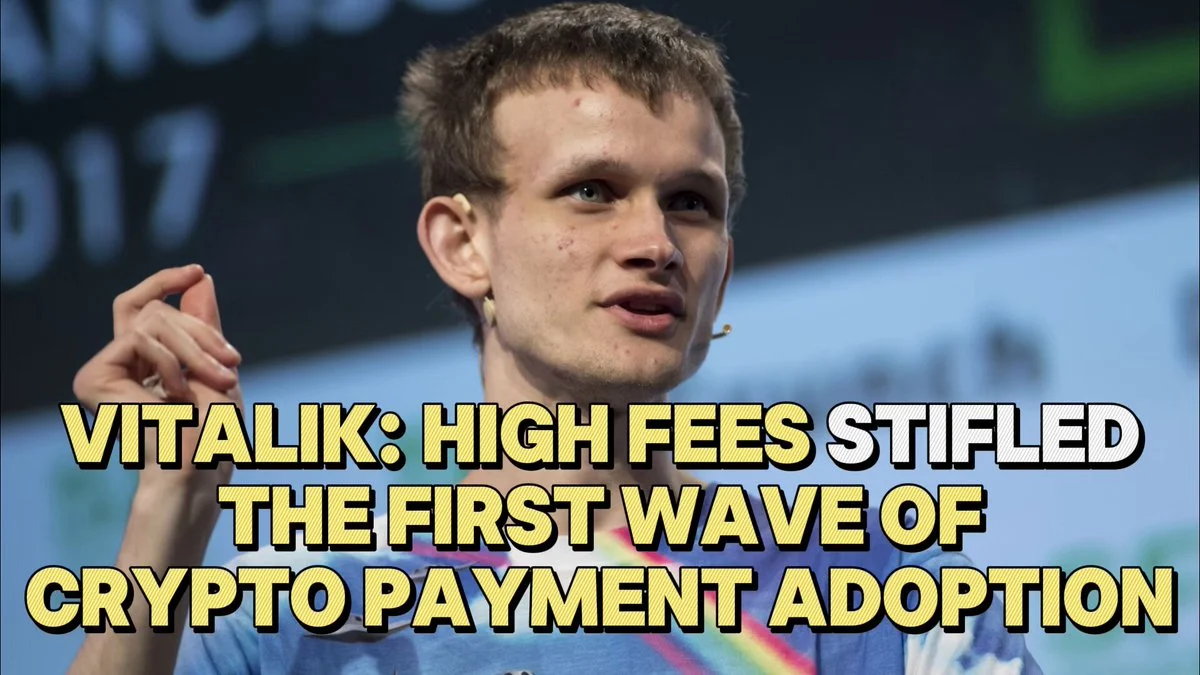

Ethereum founder Vitalik Buterin said high transaction fees strangled the first real attempt at decentralized crypto payments, recalling a trip to Argentina where locals relied on free, instant internal Binance transfers as the practical alternative. The fee gap, in his telling, is what killed early adoption of on-chain payments for everyday use.
The picture is different now. Ethereum L2 fees have dropped below one cent, and both Optimism and Arbitrum have hit the Stage 1 security milestone, finally making on-chain payments economically competitive with the centralized rails users migrated to during the high-fee era.
Why it matters
Buterin also said the original rollup-centric scaling roadmap is being revised. As the L1 itself accelerates, the future is synergistic development of L1 and L2, with rollups needing to justify their existence through differentiated value such as privacy or application-specific features rather than raw cost savings alone.
Market impact
The shift reframes the L2 thesis: cheap execution is becoming the baseline, not the moat. L2s that compete only on price risk commoditization as L1 throughput rises, while L2s building application-specific stacks or privacy primitives have a defensible angle. For Ethereum, it underscores that scaling is no longer the binding constraint on payment adoption — user experience, merchant integration, and stablecoin rails are.
Source: [Vitalik Buterin - What Excites Me About the Next Decade - TOKEN2049 Singapore 2024 — YouTube](https://www.youtube.com/watch?v=JpOSqLjYb0o)



Frequently asked questions
-
Why does Vitalik Buterin say high fees killed early crypto payment adoption?
Recalling a trip to Argentina, Buterin pointed to locals using free internal Binance transfers as the practical alternative. On-chain transaction costs were too high to compete with centralized rails for everyday payments, in his telling.
-
How cheap are Ethereum L2 fees now?
Ethereum L2 fees have dropped below one cent per transaction, and both Optimism and Arbitrum have reached the Stage 1 security milestone — the point at which rollups have limited trust assumptions remaining.
-
Is the rollup-centric scaling roadmap changing?
Yes. Buterin said the original rollup-centric approach is being revised. As the L1 itself accelerates its scaling, the future is synergistic development of L1 and L2, with L2s needing to provide differentiated value such as privacy or application-specific features.
-
What does this mean for L2 competitive positioning?
Cheap execution is becoming the baseline, not the moat. L2s competing only on price risk commoditization as L1 throughput rises, while L2s building application-specific stacks or privacy primitives have a more defensible angle.
-
What is the binding constraint on crypto payment adoption now?
According to Buterin's framing, scaling and transaction cost are no longer the binding constraint. User experience, merchant integration, and stablecoin payment rails are the remaining bottlenecks to mainstream payment adoption.

 Crypto News
 CoinDesk
 Crypto Rank News
 TheBlock
 CryptoSlate
 CoinTelegraph